
Culture Shock, Part 1
I’m better now, but a couple of days ago I had a little bit of a breakdown due to culture shock. Culture shock may not even be the right term, because I’m not so much shocked by the culture, but more unbalanced and unsettled by everything that is different than what is familiar to me.
 And let me tell you, almost every single thing is different. And that doesn’t necessarily mean that it’s bad or I don’t like it. In fact I do like, and even love, most everything. It’s just that all of the different all of the time can be overstimulating and overwhelming.
This simple (and familiar) breakfast of oatmeal and buttered toast talked me off the edge yesterday morning. I had been so stressed the day before, and silly as it sounds, oatmeal brought me back. :)
Today I’ll tell you about language and transportation and I’ll get to a few more topics, like life at home, cooking, shopping, dress, and possibly a few others in the coming days.
LANGUAGE Tamil is the official language of this state we’re in, Tamil Nadu. In big cities, like Chennai, you’ll find more people fluent in English, but in smaller cities and towns, it’s rare to find English speakers.
All of my husband’s family can speak English, and they do make an effort to speak English when my kids and I are around, but often they slip back into Tamil or a mix of English and Tamil because that’s what’s most familiar to them and what they’re used to. And that is absolutely understandable.
But, since they don’t notice that they’re going back and forth between Tamil and English, they don’t notice that I’m not following the conversation, and that has led to some challenges because I don’t always know what’s going on, like what time we're leaving, or who it is we're visiting.
In public places, like when we went shopping yesterday, I can’t really communicate with locals on my own. I need someone with me to translate. Everyone is so kind (and sometimes really friendly) and interested in trying to communicate, but on my own I can barely get basic ideas across. This lack of independence is challenging.
Another thing about language is the words used. In addition to needing different words to communicate about the unique aspects of everyday life, there is also a heavy British influence on the English used. Over the years I’ve grown accustomed to a lot of the vocabulary, but some of it still sits funny on my ears.
Now I find myself saying things like “What is the program for today?” rather than “What are we doing today?”
And I know that a geyser is the water heater used to heat the water for bath time and that a plaster is a band aid.
There are lots of differences. I’m going to start paying attention and compiling a list, because it’s fun and also because I find that writing helps me process things and feel more comfortable and at ease (hmm, that sounds a lot like the goals of yoga!).
TRANSPORTATION Ha! Transportation is so interesting here. First off, the driver seat is on the opposite side than in the US, and the traffic drives on the opposite side of the road as in the US. I think I’m pretty comfortable with this, having been here a few times, but there's more.
The roads are bumpy, narrow, and there are rarely shoulders, much less curbs. In fact, there are open wastewater channels alongside many roads. One has to be mindful to avoid falling into one of these channels, especially when walking in town because there is no easement between the road and the storefronts.
In big cities there is a line on the road dividing the two directions of traffic, kind of like in the US (but not really! read on…), but in smaller cities there are no dividing lines.
Lines or no lines, drivers drive wherever they want to drive. From the perspective of an American who has always driven like a grandma and followed ALL of the traffic rules (I still quote traffic laws I learned in driver’s ed!), I don’t think I’ll ever fully get used to the traffic here.
Most people commute via bus, motorcycle, or auto rickshaw. Some people have private cars and some people use taxis. It’s common to see entire families of four or five on a motorbike. The dad drives with the toddler in front of him and the child behind him. Mom sits at the back, side saddle and holding the baby.
Children's carseats are not used at all.
The traffic on the road is a mix of all of these vehicles plus bicycles, pedestrians, carts drawn by oxen (in towns), and cows, goats, stray dogs, and sometimes monkeys. Seriously.
With all these types of commuters on the narrow roads, the traffic is really wild. Drivers honk constantly, not because there’s an emergency or to tell other drivers they’re driving badly, but just to let the other drivers know they’re there.
“Hey! Here I am! I’m going to pass you on the right! Don’t hit me!”
“Hey! You who is walking down the side of the road! Watch out because I’m driving a bus within 2 feet of you at 45 mph!”
“Hey! I see you! We’re the only two cars on the road so let’s honk at each other!”
All the commuters accelerate, brake, swerve, pass, and merge in an impressive dance. Everyone’s going as fast as they can, often on the wrong side of the road, to get to wherever it is they need to go, but everyone is respectful of each other. I haven’t ever seen a single instance of road rage and accidents are rare.
Thank you for letting me share all this with you! Let me know if you have any questions about life in India. I’ll answer your question in my next post.
Yoga for High School Athletes
Greetings from India! I'll be writing to you from here for the next 3-4 weeks while I visit family. I'm so grateful for the awesome TYR team who is running the studio in my absence!
This week I'd like to share a new video we recorded, Yoga for High School Athletes. This school year we had the honor of working with the Round Rock High School girls' soccer teams. Emily, our Director of Teacher Training, taught a weekly class for the girls and together they worked through issues typical to soccer players, namely tightness in the hips and legs due to ongoing running, strength training, and playing.
In this video, Emily highlights 3 poses for the hips, quads, and hamstrings. These are perfect not only for soccer players, but also for athletes that do a lot of running or strength training, and also for athletes who play asymmetrical sports such as baseball, golf, and tennis, to name a few.
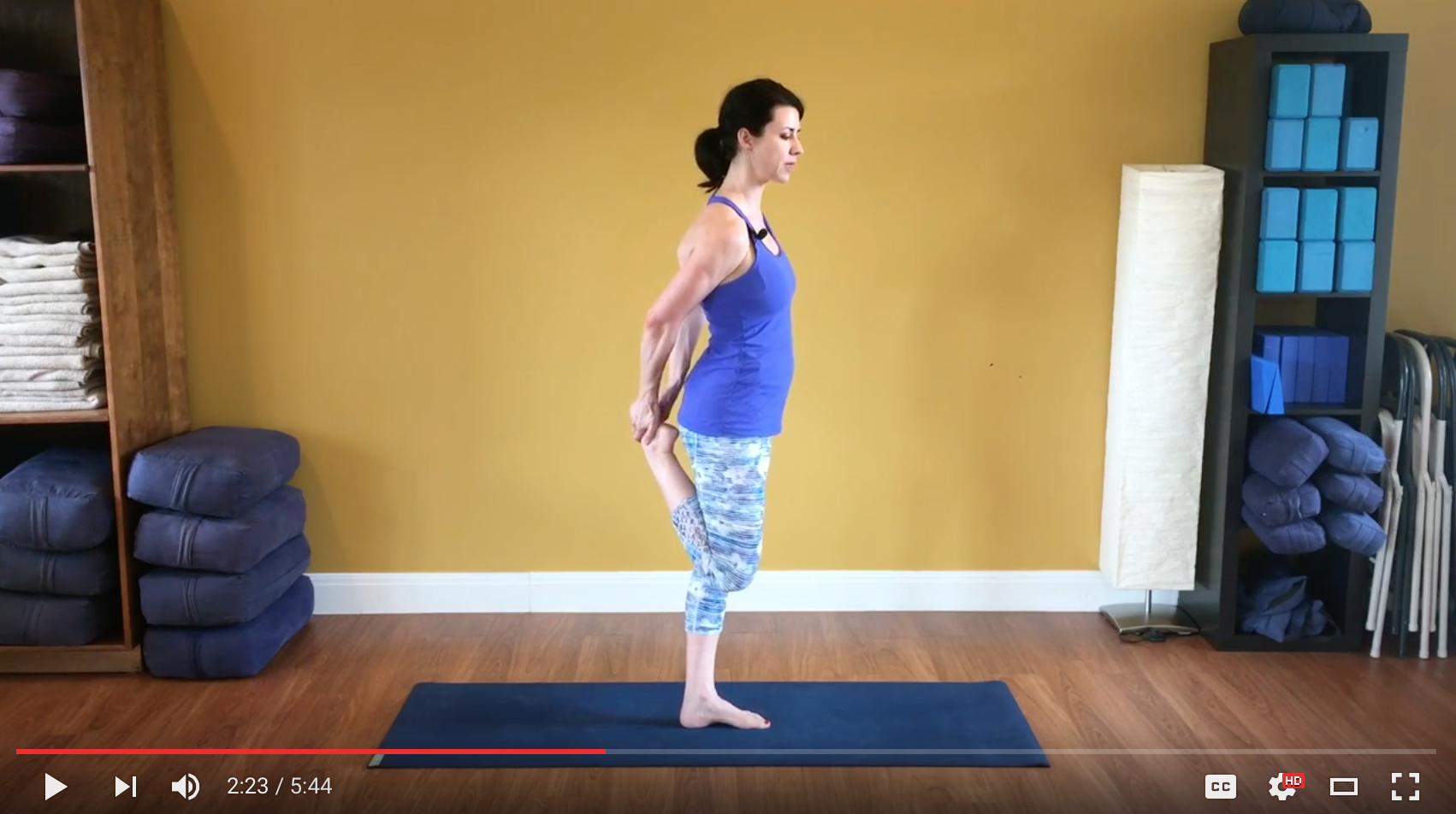
Later this month, Emily will teach a 4 week series on Yoga for High School Athletes. If your high school athlete is interested in summer cross training that will help improve flexibility and performance, and reduce the likelihood of injuries, please click here to learn more.
India Trip
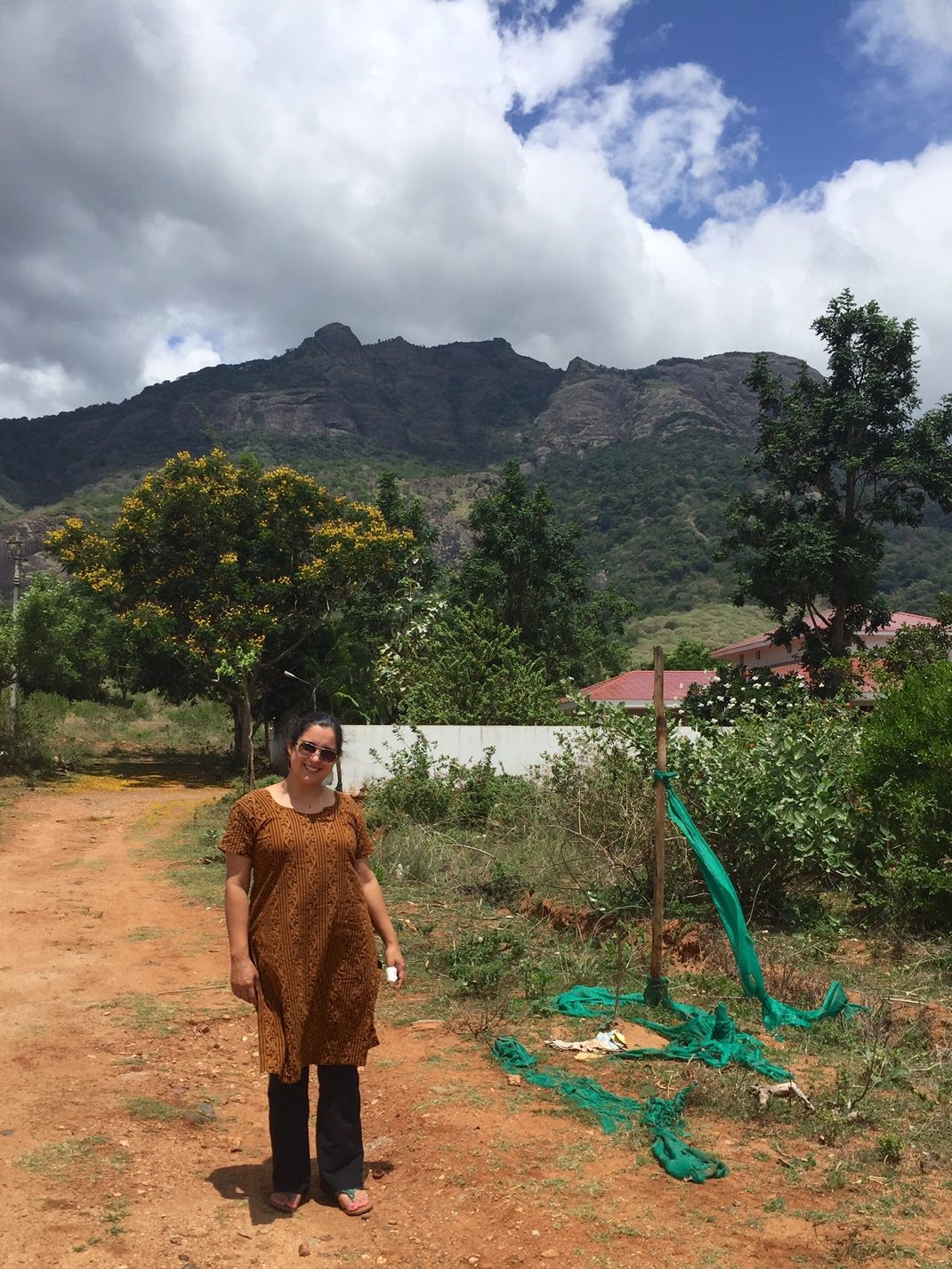 Today was my second day in India. We're recovering from jet lag and I'm recovering from a pretty deep cut to my thumb. It was a kitchen accident - I was cutting a melon. (PSA: be extra careful when cutting with a kitchen knife you're not used to!)
I'm practicing slowing down while I'm here, recommitting to a daily asana practice, and reconnecting with myself. It's a long-overdue opportunity for reflection and growth, and I'm really grateful for it. I'll also be studying at the Krishnamacharya Yoga Mandiram in Chennai during the week of June 13th.
I'll be posting about my trip on my personal and the studio's Facebook pages, and probably some on our Instagram page as well. Please send me a friend request if you'd like to hear about my random observations about India, and like/follow us on Facebook and Instagram to hear about my yoga-related experiences and learnings.
All my best, Zelinda
P.S. Don't forget our Summer Schedule starts today!